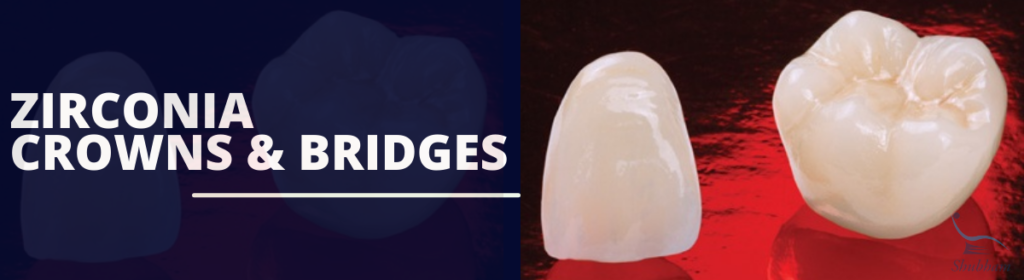
What is a zirconia crown?

A zirconia crown is a metal-free crown made from Zirconium dioxide, a white powdered ceramic material. Zirconia crowns and bridges are worn to improve the appearance of disfigured, stained, decayed, or missing teeth. Its ceramic properties and the fact that it’s milled from a single block make it a strong dental prosthetic. These natural-looking restorations can meet the ever-increasing demands of patients, which makes them the treatment of choice today.
Which is better, Zirconia crowns or porcelain?
Zirconia crowns are chosen over conventional PFM crowns or gold crowns for the following reasons-
Excellent aesthetics- Zirconia crowns are translucent in appearance and look like almost natural teeth. They are difficult to distinguish from natural teeth, as the shade of both matches accurately. Zirconia is metal-free, so it prevents darkening around the gingival area.
Superior strength- They are at least three times stronger than porcelain or PFM restorations.
Durability– Unlike porcelain, Zirconia can withstand wear and tear without chipping, which is why zirconia restorations tolerate extreme chewing and bruxism.
Thinner– The strength of Zirconia allows for far thinner dental crowns than those made with metals.
Less plaque accumulation- The smooth surface of zirconia crowns helps to reduce plaque accumulation. It also promotes a healthy tissue response.
Safe-They are compatible with the human body as they are metal-free crowns. There is no fear of the body rejecting zirconia or an allergic reaction to it.
Comfortable – Zirconia crowns are very comfortable as they do not transmit hot and cold in the same way as conventional PFM restorations.
Are there any disadvantages of Zirconia crowns and bridges?
There are minimal disadvantages of Zirconia crowns. The friction against the opposing tooth surface can damage the opposing teeth. Frequent check-ups can prevent this damage.
How is the Zirconia or metal-free crown fitted?
The process is similar to other dental crowns. It involves two steps:
Preparation (first step)
Fitting of the crown (second step)
The first step involves assessment and measurement of the affected tooth. Your dentist will discuss the whole procedure with you. The affected tooth is first cleaned and then reshaped with a small drill, which reduces its size.
A small layer of the tooth is removed and given the perfect shape under local anesthesia so that the crown can fit on the tooth.
A mold is made with dental putty, and bite registration is done, which is sent to the dental laboratory for fabrication of a zirconia crown.
The second stage is where the new crown is fitted on the tooth. The tooth surface is roughened and prepared, which increases the bond between the crown and tooth.
The dentist will check the appearance and fit of the crown before cementing it into position.
It is then given a final polish, and the crown is cemented on your tooth.
A Zirconia crown must be taken care of just like your natural teeth.
The Bottomline
Most dentists are switching from conventional PFM crowns to zirconia crowns due to their high-class esthetics and durability. Currently, Zirconia is becoming the most popular material for making dental crowns and bridges, and those old-style restorations are becoming a thing of the past. If you want to know everything about all types of crowns and bridges, read more
If you are looking for Zirconia crowns and bridges, we are here to assist you if you wish to discuss the case in detail.
FREQUENTLY ASKED QUESTIONS ABOUT ZIRCONIA CROWNS AND BRIDGES
What are zirconia crowns and bridges?
Zirconia crowns and bridges are tooth-colored dental restorations made from zirconia, a strong and durable ceramic material. Crowns can restore damaged or weakened teeth, while bridges can replace one or more missing teeth.
Are zirconia crowns and bridges strong?
Yes. Zirconia is a strong dental ceramic that can withstand normal chewing forces. The suitability and durability of a zirconia restoration depend on factors such as the tooth’s location, bite, oral hygiene, and proper treatment planning.
Do zirconia crowns look natural?
Zirconia crowns provide a natural-looking appearance because they are tooth-colored and can be designed to match the surrounding teeth. The final appearance depends on the type of zirconia used, shade selection, and the quality of the restoration.
How long do zirconia crowns and bridges last?
Zirconia crowns and bridges provide long-lasting results with proper oral hygiene and regular dental check-ups. Their lifespan varies depending on factors such as oral hygiene, bite forces, the condition of the supporting teeth, and overall dental care.
Are zirconia crowns better than metal crowns?
Zirconia crowns offer a tooth-colored and metal-free alternative to traditional metal-based restorations. However, the most suitable material depends on the location of the tooth, bite, aesthetics, and individual dental needs.
Can zirconia bridges replace missing teeth?
Yes. Zirconia bridges can replace certain missing teeth by using neighboring teeth or appropriate supporting structures as anchors. Your dentist will assess the supporting teeth and bite before recommending a bridge.
Are zirconia crowns suitable for front teeth?
Zirconia crowns can be used for front teeth when appropriate. Their appearance and strength make them an option for patients who want a tooth-colored restoration. The dentist will recommend the most suitable material based on the tooth and aesthetic requirements.
How should I care for zirconia crowns and bridges?
Maintain good brushing and flossing habits and attend regular dental check-ups. Special attention should be given to cleaning around the edges of crowns and underneath bridges to help maintain healthy gums and supporting teeth.