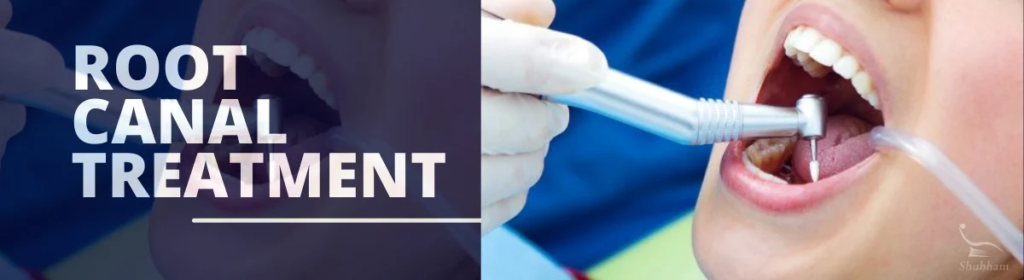
Root canal treatment (RCT) is a dental procedure used to treat a tooth when the pulp inside it becomes infected, inflamed, or damaged. The aim is to remove the affected tissue, clean and disinfect the root canals, seal them, and restore the tooth so that the natural tooth can be preserved. At Shubham Dental Clinic in Hisar, Dr. Rinku Mittal, BDS, provides personalised dental care based on the condition of each tooth. An examination and dental X-ray help determine whether root canal treatment is appropriate and whether the tooth can be restored.
Are you experiencing severe or persistent tooth pain? Do you have pain when chewing or biting? Have you noticed tooth discoloration or sensitivity to hot or cold?
If the answer is yes, it may be time to consult a dentist to find out whether root canal treatment (RCT) is appropriate for your tooth.
RCT, also known as endodontic treatment, removes infected or inflamed pulp tissue from inside the tooth. It can help relieve pain, control infection, and preserve the natural tooth whenever possible.
Why Is Root Canal Treatment Needed?
A root canal may be recommended when the pulp inside a tooth becomes infected or significantly inflamed. This can happen because of deep tooth decay, a crack or fracture, repeated dental treatment, or an injury to the tooth.
If the infection is left untreated, it can spread to the tissues around the tooth and may lead to swelling or an abscess. Early dental evaluation can help determine the cause of the pain and whether root canal treatment can help save the natural tooth.
How Is Root Canal Treatment Done at Shubham Dental Clinic?
After a thorough dental examination, your dentist assesses the tooth and may use X-rays to understand the extent of the infection or damage. If root canal treatment is recommended, the procedure generally involves the following stages.
Stages of Root Canal Treatment
1. Cleaning the root canal
The tooth and surrounding area are numbed with local anesthesia. The dentist creates a small opening in the tooth to access the pulp chamber and root canals. Infected or inflamed pulp tissue, bacteria, and debris are carefully removed using specialized dental instruments.
2. Cleaning, disinfecting, and filling the root canal
We thoroughly clean and disinfect the root canals using appropriate irrigating solutions. We then fill them with a suitable material and seal them to help prevent bacteria from entering the canals again.
3. Restoring the tooth with a filling or crown
After the root canal procedure, we seal the opening in the tooth with a restoration. Depending on the amount of tooth structure remaining and the tooth’s location, we may recommend a permanent dental filling or dental crown to restore strength, function, and appearance.
How long does each stage take?
The time required for root canal treatment varies from tooth to tooth. Front teeth, premolars, and molars can differ in the number and shape of their root canals, and teeth with more complex infections may require additional appointments. Your dentist will explain the expected treatment time after examining the tooth.
What Happens During the First RCT Appointment?
Your first appointment begins with a discussion about your symptoms, dental history, and any pain or sensitivity you may be experiencing. Your dentist will examine the tooth and may take a dental X-ray to assess the roots and surrounding structures. Based on the examination and X-ray, the dentist will determine whether the tooth is suitable for root canal treatment and discuss the treatment options with you.
If root canal treatment is appropriate and the procedure can be started during the appointment, the tooth and surrounding area will be numbed with local anaesthesia before treatment begins. Your dentist will explain the planned procedure and answer any questions you may have before proceeding.
Why Can’t a Deeply Infected Tooth Simply Be Filled?
A dental filling can repair a tooth when the damage or decay has not caused irreversible damage to the pulp inside the tooth. When the pulp becomes irreversibly inflamed, infected, or dies, simply placing a filling cannot remove the affected tissue. In such situations, root canal treatment may be recommended to clean and seal the root canals and help preserve the natural tooth.
The appropriate treatment depends on the condition of the tooth. A dental examination and, when required, an X-ray help your dentist determine whether a filling, root canal treatment, or another treatment is appropriate.
| Dental Filling | Root Canal Treatment (RCT) |
|---|---|
| Used to repair a tooth affected by decay or damage when the pulp can be maintained | Used when the pulp is irreversibly inflamed, infected, or has become necrotic |
| Removes the damaged/decayed portion and restores the tooth | Removes the affected pulp, cleans and disinfects the root canals, then seals them |
| Does not involve cleaning the root canals | Specifically treats the inside of the root canal system |
| Usually a simpler restoration | A more involved procedure that may require one or more appointments |
Why Choose Shubham Dental Clinic for Root Canal Treatment in Hisar?
Finding a dental clinic in Hisar that combines expertise, affordability, and compassionate care is essential, and Dr. Rinku Mittal’s Shubham Dental Clinic meets all these criteria. Here’s why it’s regarded as the best dental clinic for root canal treatment in Hisar:
– Highly Qualified Dentist: Dr. Rinku Mittal has 26 years of experience in dentistry. She is skilled in performing root canal treatments efficiently, ensuring patients receive the best care.
– State-of-the-Art Technology: The clinic is equipped with modern technology that aids in precise diagnosis and treatment.
– Patient-Centered Approach: At Shubham Dental Clinic, patient comfort is a priority. The clinic offers personalized care, ensuring each patient receives a customized treatment plan suited to their specific dental needs.
– Affordable Dentistry: Shubham Dental Clinic believes in making high-quality dental care cost-effective. They make RCT treatment affordable for patients without sacrificing quality.
When do you need RCT?
Your dentist may recommend root canal treatment when the pulp inside a tooth becomes irreversibly inflamed, infected, or dies. This can happen because of deep dental decay, repeated dental procedures, cracks, trauma, or other damage to the tooth.
Common signs that may indicate the need for RCT include:
- Persistent or severe toothache
- Pain while biting or chewing
- Prolonged sensitivity to hot or cold
- Swelling around the affected tooth
- A dental abscess or a pimple on the gum
- Pus or an unpleasant taste in the mouth
- Darkening or discoloration of the tooth
- Pain that occurs spontaneously or disturbs sleep
- A tooth damaged by trauma
However, symptoms alone cannot confirm that root canal treatment is needed. In some cases, an infected or damaged tooth may cause little or no noticeable pain. A dental examination and, when required, appropriate X-rays can help identify problems that may not be obvious from symptoms alone.
If you are experiencing any of these symptoms, read our detailed guide to the [warning signs that may indicate you need root canal treatment]
How long does the procedure take?
When it comes to dental treatment, early diagnosis and timely treatment are important. RCT may sometimes be completed in one appointment, while more complex cases may require two or more appointments. The number of visits depends on factors such as the severity of infection, the number and shape of the root canals, and the individual condition of the tooth.
Do You Need a Crown After Root Canal Treatment?
A tooth treated with RCT may have lost a significant amount of tooth structure because of decay, previous restorations, cracks, or other damage. This can affect how well the tooth withstands normal biting forces.
Depending on the amount of remaining tooth structure, the tooth’s location, and its functional demands, your dentist may recommend a dental crown or another suitable restoration to protect the treated tooth and restore its strength, function, and appearance. Posterior teeth, such as premolars and molars, may more often need a crown or other cuspal protection because they handle greater chewing forces.
Your dentist will assess the individual tooth and decide whether you need a crown based on its condition, rather than simply because you have had root canal treatment.
Can Every Tooth Be Saved With RCT?
Root canal treatment treats the inside of a tooth and, when possible, helps preserve the natural tooth. However, not every tooth is suitable for root canal treatment or long-term restoration. Your dentist will assess the condition of the tooth before recommending treatment.
The assessment may consider:
- Remaining tooth structure: Whether enough healthy tooth structure remains to restore and protect the tooth.
- Extent and location of decay: Deep or extensive decay may affect whether your dentist can predictably restore the tooth.
- Cracks or fractures: Certain cracks or fractures may make a tooth unsuitable for long-term preservation.
- Gum and bone support: The health and support of the tissues surrounding the tooth are important for its long-term outlook.
- Ability to restore the tooth: The tooth needs to be capable of receiving a suitable restoration after root canal treatment.
- Overall prognosis: Your dentist considers the condition of the tooth and surrounding tissues to determine whether treatment is likely to provide a predictable long-term result.
If a tooth cannot be predictably treated or restored, extraction may sometimes need to be considered. Your dentist will discuss the findings and available treatment options with you before proceeding.
Root Canal Treatment vs Tooth Extraction
When a tooth has significant infection or damage, treatment options may include root canal treatment or extraction. The appropriate option depends on whether the tooth can be predictably treated and restored.
| Root Canal Treatment | Tooth Extraction |
|---|---|
| Treats the infection inside the tooth while preserving the natural tooth | Removes the affected tooth |
| Considered when the tooth can be suitably treated and restored | May be considered when a tooth cannot be predictably restored or has a poor prognosis |
| The natural tooth remains in place and can be restored for function | The missing tooth may need to be replaced with an implant, bridge, denture, or another suitable option |
| Usually involves cleaning, disinfecting, and sealing the root canals | Involves removing the tooth from its socket |
Your dentist will recommend RCT or extraction after examining the tooth and assessing its restorability, surrounding tissues, overall condition, and long-term prognosis.
Want to understand the difference in more detail? Read our guide: Root Canal Treatment vs Tooth Extraction: Which Option May Be Suitable?
After Root Canal Treatment: What Should You Expect?
After root canal treatment, you may experience mild tenderness or discomfort for a few days. This usually improves as the tooth settles. If you experience persistent or increasing pain, swelling, or any other concern, contact your dentist for advice.
Until your dentist completes the final restoration, avoid chewing hard or sticky foods on the treated tooth and try not to put excessive pressure on it.
Continue regular brushing and flossing to maintain good oral hygiene, and follow your dentist’s instructions regarding any prescribed medication and follow-up appointments.
If your dentist recommends a permanent filling, crown, or another restoration, complete the restoration as advised to protect the treated tooth from further damage and restore its function.
Is RCT Painful?
Your dentist performs root canal treatment under local anaesthesia, so the procedure itself is generally comfortable for most patients. Some tenderness or discomfort may occur after treatment and usually settles as the tooth heals. If severe inflammation or infection has affected the tooth, achieving complete comfort during treatment can sometimes be more challenging.
What Happens If You Delay Root Canal Treatment?
If you leave an infected or significantly inflamed tooth untreated, the problem may worsen and can result in an abscess, swelling, damage to surrounding tissues, or eventual loss of the tooth. Pain may sometimes decrease even though the underlying infection remains. For this reason, consult your dentist rather than ignore persistent tooth pain or sensitivity.
Frequently Asked Questions
Is root canal treatment painful?
We usually perform root canal treatment under local anesthesia, so you should not feel pain during the procedure. You may experience some tenderness or mild discomfort for a few days afterward, but appropriate care and medication, when recommended by your dentist, can usually manage it
How long does root canal treatment take?
We may complete root canal treatment in one appointment, while more complex cases may require two or more visits. The treatment time depends on the severity of the infection, the number and shape of the root canals, and the condition of the tooth.
Is a crown necessary after root canal treatment?
Your dentist may recommend a crown after root canal treatment, particularly for teeth that have lost significant tooth structure or face a higher risk of fracture. Your dentist can advise whether a crown is appropriate based on the condition and location of the treated tooth.
Can a root canal treated tooth get infected again?
Yes. Although root canal treatment removes infection and seals the tooth, a treated tooth can sometimes develop another infection. New decay, leakage around a restoration, or bacteria that remain in the root canal system can cause reinfection. In some cases, problems with the original treatment can also contribute to infection returning. In such cases, your dentist may recommend root canal retreatment.
What is Re-RCT or root canal retreatment?
Re-RCT is a repeat root canal treatment that your dentist may perform when a previously treated tooth has a persistent or recurring infection or other problems. Your dentist removes the existing root canal filling, cleans and disinfects the canals again, and reseals the tooth.
What should I avoid after RCT?
Don’t chew hard or sticky foods until the tooth has been properly restored. Continue regular brushing and flossing, and follow your dentist’s instructions regarding medication and follow-up appointments.
How can I know if I need a root canal treatment?
Persistent toothache, pain while chewing or biting, prolonged sensitivity to hot or cold, swelling, or tooth discoloration may indicate a problem with the tooth pulp. A dental examination and, when needed, an X-ray can help determine whether root canal treatment is required.
Can a root canal save my natural tooth?
Yes. Root canal treatment removes infection from inside the tooth and preserves the natural tooth whenever possible. After treatment, your dentist can restore the tooth to help it function normally.
Can I eat after root canal treatment?
Yes, but it is best to wait until the numbness from local anesthesia has worn off before eating. Avoid chewing hard or sticky foods on the treated tooth until your dentist completes the permanent restoration.
Book a Root Canal Consultation at Shubham Dental Clinic in Hisar
If you are experiencing tooth pain, sensitivity, swelling, or discomfort while chewing, a dental examination can help identify the cause.
At Shubham Dental Clinic in Hisar, Dr. Rinku Mittal provides personalized root canal treatment based on the condition of each tooth, with a focus on preserving natural teeth whenever possible and helping patients understand their treatment options.