
Why do my gums bleed when I brush? Causes, Treatment, and Prevention
Have you noticed blood while brushing or flossing your teeth? You may wonder whether it is normal or whether you should be concerned.
Occasional bleeding can have different causes, but repeated or unexplained bleeding gums should not simply be ignored.
The most common reason is inflammation of the gums caused by plaque buildup. However, bleeding gums can also be associated with tartar, gum disease, aggressive brushing, certain medications, hormonal changes, and less commonly, other health conditions.
The good news is that many causes of bleeding gums can be managed successfully when identified early.
If your gums bleed regularly, a dental examination can help determine the underlying cause and the treatment you may need.
Is Bleeding From the Gums Normal?
Healthy gums generally should not bleed regularly during routine brushing or cleaning between the teeth.
If your gums bleed repeatedly, especially when brushing or flossing, it might be a sign of inflamed gums.
The most common cause is plaque buildup along the gumline.
Plaque is a sticky film containing bacteria that forms on teeth every day. If it is not removed effectively, it can lead to gum inflammation.
Over time, plaque can harden into tartar or calculus, which cannot be removed completely with ordinary brushing.
Why Do My Gums Bleed When I Brush?
There are several possible causes.
1. Plaque and Tartar Buildup
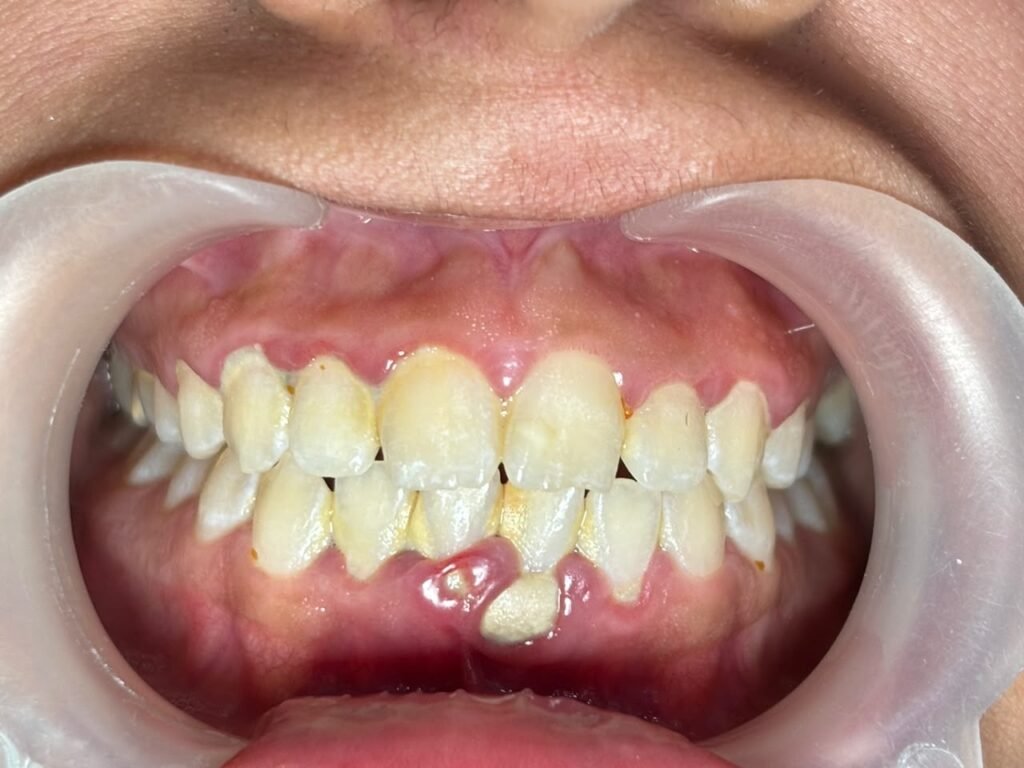
Plaque accumulation around the gum line is one of the most common causes of bleeding gums.
When plaque remains on the teeth, it can irritate the surrounding gum tissue. If it hardens into tartar, the deposits can continue to contribute to gum inflammation.
Professional dental cleaning may be recommended when tartar has accumulated.
2. Gingivitis
Gingivitis is inflammation of the gums.
Common signs include:
- Bleeding while brushing or flossing
- Red or swollen gums
- Tender gums
- Bad breath
- Changes in the appearance of the gumline
Gingivitis can often be improved with appropriate professional care and good daily oral hygiene.
However, it is important not to ignore persistent gum inflammation because untreated gum disease can progress.
3. Periodontitis
When gum disease progresses, it can affect the tissues and bone that support the teeth.
Periodontitis may be associated with:
- Persistent gum bleeding
- Gum recession
- Bad breath
- Gum swelling
- Pockets around the teeth
- Tooth mobility
- Changes in the way teeth fit together
Advanced periodontal disease can eventually contribute to tooth loss.
Early assessment and appropriate treatment are therefore important.
4. Brushing Too Hard
Bleeding gums are not always caused by gum disease.
Using excessive force while brushing or using a hard-bristled toothbrush can irritate the gum tissue.
Use a soft-bristled toothbrush and gentle movements rather than scrubbing aggressively.
5. Incorrect or Infrequent Flossing
If you have recently started cleaning between your teeth, your gums may initially feel sensitive.
However, completely avoiding interdental cleaning is not the solution.
Plaque can accumulate between teeth where a toothbrush cannot reach effectively.
Gentle, regular cleaning between the teeth is an important part of maintaining gum health.
If bleeding continues, your dentist can check whether there is an underlying gum problem or whether your cleaning technique needs adjustment.
6. Hormonal Changes
Hormonal changes can affect gum tissues and may make some people more susceptible to gum inflammation.
For example, gum sensitivity can increase during pregnancy or other periods of hormonal change.
Maintaining good oral hygiene and having appropriate dental check-ups can help manage these changes.
7. Certain Medications
Some medications can affect the gums or increase the tendency to bleed.
If you notice persistent or unusual bleeding and take regular medication, inform your dentist and, when appropriate, your doctor.
Do not stop prescribed medication on your own.
8. Less Common Causes
In some situations, persistent bleeding may be associated with nutritional deficiencies, bleeding disorders, or other medical conditions.
These causes are less common than plaque-related gum inflammation.
If bleeding is unusual, excessive, persistent, or occurs in other parts of the body as well, medical evaluation may be appropriate.
What Should You Do If Your Gums Bleed?
The first step is to determine why they are bleeding.
In the meantime, maintain gentle but effective oral hygiene.
Brush twice a day
Use a soft-bristled toothbrush and fluoride toothpaste.
Brush gently along the gumline without using excessive pressure.
Clean between your teeth
Use dental floss or another interdental cleaning method recommended for you.
Don’t stop brushing because your gums bleed
If you stop brushing completely, it can allow more plaque to accumulate and may make gum inflammation worse.
Instead, brush gently and arrange a dental examination if the bleeding persists.
Don’t try to scrape tartar off yourself
Hardened tartar should be removed professionally.
Using sharp objects or attempting to scrape deposits from your teeth at home can injure your gums and other oral tissues.
Can Scaling Help Bleeding Gums?
It can, when plaque and tartar buildup are contributing to gum inflammation.
Professional scaling removes hardened deposits that can’t be removed effectively with a toothbrush.
Depending on your gums condition, your dentist may recommend routine scaling and polishing or a more extensive periodontal cleaning.
However, scaling is not automatically the treatment for every cause of bleeding gums.
The correct treatment depends on the underlying problem.
For more information, read our guide:
Teeth Cleaning, Scaling and Polishing in Hisar
Does Scaling Damage Your Teeth?
Properly performed professional scaling does not normally damage healthy tooth enamel.
Some patients may notice temporary sensitivity after tartar is removed.
This can happen because deposits that were previously covering parts of the tooth have been removed, or because inflamed gums are beginning to recover.
If sensitivity is severe or persistent, discuss it with your dentist.
Should You Stop Flossing If Your Gums Bleed?
Generally, no.
If plaque is contributing to gum inflammation, stopping interdental cleaning can allow more plaque to accumulate.
Instead, clean between the teeth gently and consistently.
If bleeding continues or is significant, have your gums examined so that the underlying cause can be identified.
Your dentist or dental team can also demonstrate the appropriate technique for your teeth and gums.
When Should You See a Dentist for Bleeding Gums?
Arrange a dental examination if:
- Your gums bleed repeatedly
- Bleeding occurs whenever you brush or floss
- Your gums are red or swollen
- You have persistent bad breath
- You notice gum recession
- You have loose or mobile teeth
- You experience pain or tenderness in the gums
- You have significant tartar buildup
- Your gums bleed without an obvious reason
- You notice bleeding in other areas of your body as well
Don’t wait for severe pain before having your gums checked.
Gum disease can sometimes progress without causing significant pain.
Can Bleeding Gums Be Prevented?
Good daily oral hygiene can significantly help reduce plaque accumulation and support healthy gums.
Make these habits part of your routine:
Brush twice a day with fluoride toothpaste.
Clean between your teeth regularly.
Use a soft-bristled toothbrush and avoid aggressive brushing.
Limit frequent sugary foods and drinks.
Avoid smoking and tobacco products.
Have regular dental examinations according to your individual oral-health needs.
Get professional cleaning when recommended by your dentist.
The frequency of professional cleaning is not the same for everyone. It depends on your gum health, tartar buildup, and individual risk factors.
Can Bleeding Gums Lead to Tooth Loss?
Persistent gum disease can affect the tissues and bone that support the teeth.
As periodontal disease progresses, the supporting structures around teeth can become damaged. In advanced cases, teeth may become loose and eventually require extraction.
This is one reason why repeated gum bleeding should not be considered harmless.
Early diagnosis and appropriate treatment can help protect the supporting tissues around your teeth.
Does Vitamin Deficiency Cause Bleeding Gums?
Certain nutritional deficiencies can contribute to abnormal bleeding, but vitamin deficiency is not the most common explanation for bleeding gums.
Plaque-related gum inflammation is a much more common cause.
If you have persistent or unusual bleeding, your dentist can help determine whether a dental cause is likely. If necessary, further medical evaluation is recommended.
Rather than taking supplements automatically, identify the underlying cause of the bleeding.
Bleeding Gums Treatment in Hisar
If your gums bleed regularly while brushing or flossing, don’t simply try to stop the bleeding without finding out why it is happening.
At Shubham Dental Clinic, Hisar, your teeth and gums can be examined to identify plaque and tartar buildup, gum inflammation, periodontal problems, and other possible causes.
Depending on your condition, treatment may include professional scaling and polishing, improved oral-hygiene techniques, periodontal treatment, or other appropriate dental care.
The aim is not simply to stop the bleeding temporarily, but to identify and manage the underlying cause.
Frequently Asked Questions About Bleeding Gums
Why do my gums bleed when I brush?
The most common cause is inflammation of the gums associated with plaque buildup. Tartar, gum disease, brushing too hard, and other factors can also contribute.
Is bleeding gums a sign of gum disease?
Bleeding gums can be an early sign of gum inflammation or gum disease. A dental examination is the best way to determine the cause.
Should I stop brushing if my gums bleed?
No. Stopping brushing can allow more plaque to accumulate. Instead, brush gently with a soft-bristled toothbrush and have persistent bleeding evaluated.
Can scaling stop bleeding gums?
If plaque and tartar are contributing to gum inflammation, professional scaling can be an important part of treatment. The appropriate treatment depends on the underlying condition.
Does bleeding gums mean I need a root canal?
No. Bleeding gums usually relate to the gums rather than the nerve inside a tooth. Root canal treatment is meant for problems affecting the pulp of a tooth and is not a routine treatment for bleeding gums.
Can bleeding gums cause bad breath?
Yes. Plaque, tartar, and gum inflammation can contribute to bad breath. Persistent bad breath should be evaluated because it can have several causes.
Can bleeding gums be cured?
Many causes of bleeding gums can be managed if treated early. The appropriate treatment depends on why the gums are bleeding.
When should I see a dentist for bleeding gums?
If your gums bleed repeatedly, are swollen or painful, or you notice gum recession, persistent bad breath, or loose teeth, arrange a dental examination.
Key Takeaway
Bleeding gums are often a sign that your gums need attention.
The most common cause is plaque-related gum inflammation, but several other factors can contribute.
Don’t stop brushing or rely only on home remedies. Maintain gentle daily oral hygiene and have persistent or recurring bleeding evaluated by a dental professional.
Healthy gums shouldn’t be something you notice only when they start bleeding.
So in a nutshell:
1. Practice Good Oral Hygiene Measures

Bleeding gums may occur due to poor oral hygiene.
Maintain good oral habits to avoid bleeding gums and for a healthy oral cavity.
2. Use Mouthwash

Antibacterial mouthwashes can help prevent bleeding gums by reducing inflammation. Regular use of these oral disinfectants helps with bleeding gums.
3. Increase Your Intake of Vitamin C
Nutritional deficiencies can contribute to bleeding in some people. A deficiency of vitamin C or other nutrients in your diet can worsen bleeding gums, but there are no real studies.

Foods rich in Vitamin C are:
- Carrots
- Oranges
- Sweet potatoes
- Red peppers
Vitamin C supplements should be taken on the recommendation of your doctor. The prescribed daily dose of vitamin C for adults is around 65 to 90 milligrams per day.
4. Increase Your Intake of Vitamin K

Vitamin K helps in blood clotting. Deficiency of vitamin K may cause more bleeding than expected. So, intake of vitamin K-rich foods help treat bleeding gums.
Foods rich in Vitamin K are:
- Spinach
- Broccoli
- Kale
- Cabbage
- Green leafy vegetables
5. Rinse Your Mouth With Warm Saline Water

Gum disease is caused by bacteria and inflammation in the mouth, so rinsing your mouth with warm saline may reduce the inflammation and stop bleeding gums.
Take a glass of warm water, add a pinch of salt, and rinse your mouth three to four times a day. If bleeding gums are due to trauma, then warm saline rinses will not only keep your mouth clean and bacteria-free, but also speed up healing.
6. Using The Right Toothbrush

If you have sensitive gums, then use soft or extra-soft toothbrushes. Hard or medium toothbrushes are not recommended.
It is recommended that people brush their teeth with a soft toothbrush for two minutes twice daily. This will help to stimulate your gums, strengthen the tissues, and prevent bleeding gums. Brush your teeth in small circular motions and not aggressively, as it may lead to bleeding.
Replace your toothbrush every 3 months or sooner if bristles are frayed. Both manual and electric toothbrushes are equally effective.
7. Gentle Flossing Every Day

Flossing helps remove food particles and plaque along the gum line, which prevents swelling and bleeding. When you start flossing, your new routine may cause bleeding since gums aren’t used to the stimulation. But after a few days of consistent flossing, it improves overall gingival health, and bleeding reduces over time. Use your floss gently and avoid pressing it against your gum line and teeth.
Long-term treatment of bleeding gums
The best way to prevent bleeding gums is to opt for a healthy lifestyle. Some other measures for overall good gingival health are:
- Eating more green leafy and crunchy vegetables
- Avoid processed and sugary foods, and if eaten, make sure to brush your teeth after that.
- Quit smoking, as smoking lowers your body’s immune system. Quitting can heal your gums and stop bleeding.
- Change your toothbrush every 3 to 4 months
- See a doctor regularly to check for health issues that can lead to gingivitis, like diabetes
- See a dentist regularly for cleaning and polishing appointments at least twice a year to prevent gum disease.
- Maintain a balanced lifestyle, as emotional stress weakens your body’s defense system to fight the infection.
Looking for a Dentist for Bleeding Gums in Hisar?
Don’t ignore bleeding gums simply because there is no pain.
A dental examination can help determine whether the cause is plaque, tartar, gingivitis, periodontal disease, brushing technique, or another condition.
Shubham Dental Clinic
Pushpa Complex, Urban Estate II, Hisar, Haryana
Dr. Rinku Mittal, BDS

If you’re experiencing recurring gum bleeding, contact the clinic to arrange a dental consultation.
Pingback: 12 DENTAL TIPS DURING PREGNANCY – SHUBHAM DENTAL CLINIC HISAR
The article educated me a lot about dental health. Thanks Dr Rinku